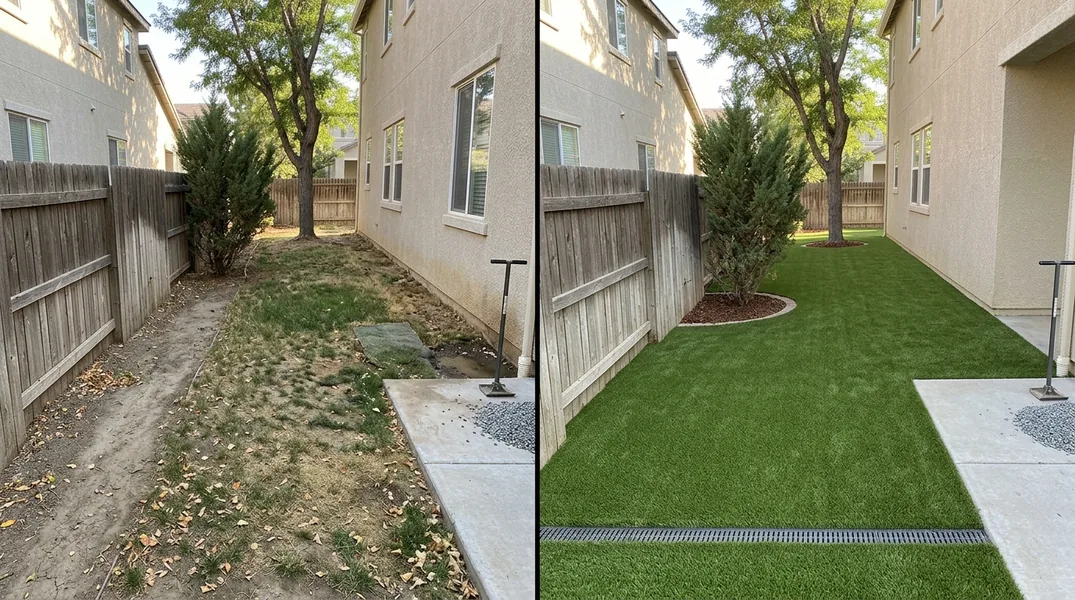
Understanding Reno's Climate Challenge for Real Grass
Living in Reno means dealing with one of the most demanding climates in the western United States. Summers are brutally hot and dry, with temperatures regularly climbing above 90 degrees Fahrenheit and humidity levels that drop to single digits. Winters bring freezing temperatures, occasional heavy snow, and freeze-thaw cycles that stress plant root systems. This combination creates a perfect storm for maintaining a healthy, green lawn year-round using traditional grass.
Real grass in Reno requires constant irrigation during the hot months just to survive, and even with dedicated watering schedules, most homeowners watch their lawns turn brown and dormant by mid-summer. The freeze-thaw cycles of winter are equally damaging, causing soil heaving that kills grass roots and creates bare patches come spring. For anyone serious about maintaining curb appeal without becoming a slave to lawn maintenance, understanding these climate realities is the first step toward making an informed decision about turf versus artificial grass.
Summer Burn-Out: Why Real Grass Struggles in Reno Heat
Summer burn-out is perhaps the most visible problem facing homeowners with real grass in the high desert. When temperatures exceed 90 degrees and the relative humidity drops below 20 percent, cool-season grasses (the most common type planted in Reno) essentially shut down. They enter a dormancy period where growth stops and the grass blades turn brown or tan, regardless of how much water you apply. This isn't a sign that your lawn is dead, but it certainly looks that way, and it can last from June through September or even October.
The irony is that maintaining a green lawn during this period requires massive amounts of water. A typical residential lawn in Reno needs between 1 and 2 inches of water per week during peak summer heat, which translates to running sprinklers multiple times daily and consuming thousands of gallons monthly. Even with this investment of time, water, and money, your lawn will likely still look stressed. Reno homeowners who choose artificial grass eliminate this problem entirely, enjoying a consistently green, lush appearance throughout the year without the summer dormancy cycle.
Winter Freeze-Thaw Cycles and Snow Damage to Real Lawns
Winter in Reno presents a different set of challenges for real grass. The region experiences freeze-thaw cycles where temperatures swing dramatically between freezing nights and mild days. This constant expansion and contraction of soil moisture damages grass roots and creates heaving, where soil literally lifts up and pushes grass plants out of the ground. Additionally, heavy snow cover that melts slowly or refreezes can create ice layers that suffocate grass underneath, leading to winter kill and bare patches that won't recover until late spring.
Real grass also struggles with salt damage if you use de-icing products on nearby walkways or driveways, and the physical wear from foot traffic on frozen or snow-covered lawns compounds the damage. By spring, many Reno homeowners find themselves dealing with thin, patchy lawns that require extensive reseeding or overseeding to restore. Artificial grass, by contrast, handles winter weather beautifully. It won't freeze, won't heave, and won't suffer from ice damage or salt exposure. Snow and ice simply rest on top and melt away, leaving the turf intact and ready for spring.
Artificial Grass vs Real Grass: The Xeriscaping and Drought-Tolerant Advantage
The term xeriscaping refers to landscaping designed to reduce water consumption, and it has become increasingly important in the western United States due to ongoing drought conditions and water restrictions. Artificial grass is perhaps the ultimate xeriscaping solution because it requires zero water once installed. This is particularly relevant in Reno, where water conservation is not just an environmental concern but often a legal requirement.
Real grass, even drought-tolerant varieties, still requires regular watering to survive and maintain its appearance. Varieties like buffalo grass or blue fescue are more resilient than traditional bluegrass, but they still need supplemental water during dry periods, and they still struggle with summer dormancy and winter damage in Reno's climate. When you choose Residential Artificial Grass Installation, you're making a statement about your commitment to water conservation while simultaneously eliminating the guesswork of trying to find the perfect drought-tolerant species for your specific yard. The water savings alone often justify the upfront installation cost within just a few years.
Long-Term Maintenance and Cost Comparison
When comparing turf versus artificial grass, it's essential to look beyond the initial installation cost and consider the total cost of ownership over 10 to 15 years. Real grass requires ongoing maintenance including weekly mowing during the growing season, regular fertilizing, weed control, aeration, overseeding, pest management, and disease treatment. These expenses add up quickly, with homeowners typically spending $1,500 to $3,000 annually on lawn care services or equipment and supplies for DIY maintenance. Factor in water bills during summer months, and the true cost of maintaining a real lawn becomes substantial.
Artificial grass requires minimal maintenance once installed. You'll occasionally rinse it off to remove dust, brush the fibers to keep them upright, and remove any debris like leaves or pine needles. There's no mowing, no fertilizing, no watering, and no seasonal stress. While artificial turf does eventually wear out and require replacement after 15 to 20 years of use, the cumulative savings in water, maintenance labor, and equipment often mean artificial grass is more economical over its lifespan. For a detailed breakdown of what pricing looks like for your specific project, Reno Turf Installation can provide a personalized estimate that compares your long-term costs.
Making Your Decision: Is Artificial Grass Right for Your Reno Home
The choice between artificial grass and real grass ultimately depends on your priorities and lifestyle. If you enjoy lawn care, have unlimited water access, and don't mind dealing with seasonal dormancy and winter damage, real grass might still work for you. However, most Reno homeowners find that the practical and financial benefits of artificial grass far outweigh the drawbacks. You'll enjoy year-round curb appeal, eliminate water waste, reduce maintenance time to near zero, and avoid the frustration of dealing with Reno's challenging climate.
Whether you're interested in Residential Artificial Grass Installation, Pet Turf & Dog Run Installation, or exploring other landscaping options, Reno Turf Installation is here to help you make the best decision for your property. Our team understands the unique demands of the high desert climate and can design a solution that meets your needs and budget. Contact us at (775) 993-3807 or request a free estimate today to see how artificial grass can transform your outdoor space while saving you time, money, and water for years to come.
Looking for a professional artificial grass installation company in Reno? Reno Turf Installation responds fast for all your artificial grass installation needs.
Get a Free Quote